

When Your Teen Gets the Keys…
September 15, 2026
Do You Know What Your Collection is Worth?
A collection can become surprising difficult to value once it has grown over the years.
You may remember the exact price you paid for a specific piece, while others may have been acquired through trades, pack openings, gifts, or more avenues. Not only this, but the prices of parts of your collection may have gone up in price while others went down.
At some point for most collectors, estimating the value in your head stops being particularly useful.
If someone asked you today, “What is your collection worth?”, could you give them a number you would be comfortable putting on an insurance application?
For many collectors, the answer is probably more complicated than they would expect with how collections are valued.
This all matters because a collection will not always fit neatly into the way a stadard homeowners policy treats personal property. The National Association of Insurance Commissioners notes that policies can place special limits on categories such as jewelry, art, antiques, and other valuables. Those limits may not come close to the value of a significant collection.
To remedy this and properly cover your collection, its important to understand what you actually own.
A Collection Doesn’t Always Look Like a Stereotypical
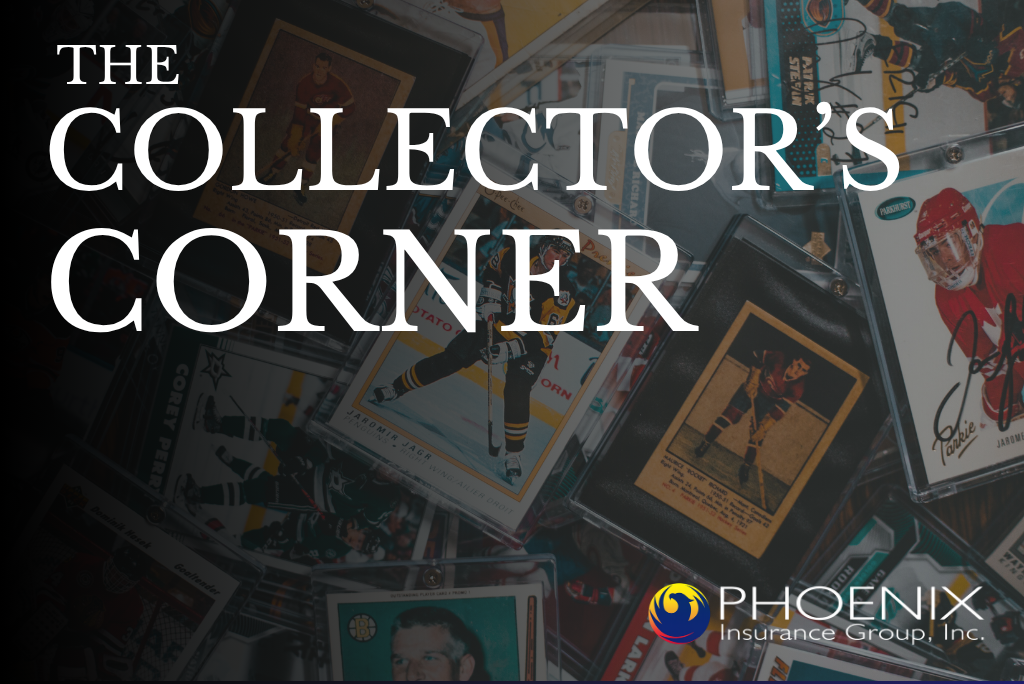
When people think of what makes a collection, the first thing that comes to mind is usually something pretty obvious. Classic examples of collections include fine art, rare books, watches, or even sports memorabilia.
While stereotypical collections might come to mind, there are a lot of collections that might sneak past people’s thoughts. For example, someone may have spent decades building a music collection through vinyls, cassettes, 8-tracks, and/or CDs that includes inexpensive albums alongside rare pressings or versions worth hundreds or thousands. Someone else may have a childhood collection of vintage video games, consoles, and accessories that are far more expensive now than they were a few years ago. Others may have closets full of Pokémon or Magic: The Gathering cards that have constantly fluctuating values.
There are countless types of collections someone can have that all have different values. From wines and antique furniture to Blu-ray / DVDs to coins, there’s plenty of collections out there.
What it comes down to is not intentionality of building a collection. Rather, it’s about what the accumulated value of the collection is.
As items are purchased, sold, traded for, inherited, found, or transfer, the accumulated value of the collection fluctuates and can get quite confusing.
What Do You Actually Have?
Before you can decide whether a collection is adequately insured, you need to know what is in it.
That sounds obvious until you actually try to do it.
It is one thing to say, “I have about 500 records,” or “I have a few hundred bottles of wine.” It is another thing to document the individual pieces that make up that collection.
Which records are valuable? Which bottles are particularly rare? Which watches have appreciated? Which pieces of memorabilia have provenance? Which cards are first editions, limited releases or particularly desirable examples?
The National Association of Insurance Commissioners recommends creating a detailed home inventory that includes photographs, receipts or appraisal documents where available, identifying information, purchase information and estimated current values. It also recommends keeping that information somewhere secure and updating it periodically.
For a serious collection, that means going beyond a spreadsheet that simply says:
“Watches: $75,000.”
A useful inventory should help someone understand what makes up that $75,000.
For an individual item, that might mean recording the manufacturer, model, serial number, edition, acquisition date, purchase price, condition and supporting documentation. For artwork, provenance and artist information may matter. For a rare collectible, edition, grading or authentication could be important. For wine, vintage, producer, storage history and quantity may all matter.
The level of documentation should reflect the collection itself.
The point is simple: if you cannot identify the collection, it becomes much harder to establish its value.
What Is It Worth Today?
This is where collecting gets particularly interesting.
What you paid is not necessarily what something is worth today.
A watch purchased fifteen years ago may be worth considerably more. A bottle of wine may have appreciated significantly. A vintage video game purchased for $20 may now command hundreds of dollars. A rare vinyl pressing might have become substantially more valuable as the market changed.
The opposite can also happen.
Something you paid a premium for may not have retained its value. A particular edition may have fallen out of favor. A market that once seemed extremely strong may have cooled.
That is why a collection’s original purchase price is useful historical information, but it should not automatically be treated as its current value.
There is another important distinction here: “value” does not always mean the same thing for every purpose.
The IRS, for example, defines fair market value in a particular context as the price property would command between a willing buyer and willing seller, with neither under compulsion and both having reasonable knowledge of the relevant facts.
Insurance valuation can involve a different question.
What would it take to replace an item? What valuation method does the policy use? Is the value agreed upon, appraised, based on actual cash value, or determined according to another provision of the policy?
Those distinctions matter.
An appraisal prepared for one purpose should not automatically be assumed to answer every other valuation question. For significant collections, it can be worth discussing with a qualified appraiser what kind of valuation is actually appropriate for the purpose at hand.
The goal is not simply to produce the biggest number.
The goal is to establish a defensible, useful understanding of what the collection is worth and why.
A Collection Is a Moving Target
Even after you have documented and valued a collection, the work is not necessarily finished.
Collectors buy things.
They sell things.
They inherit things. They trade things. They discover something they have been searching for years to find. Markets change. Condition changes. Rarity changes. Demand changes.
The collection you insured five years ago may not be the collection you have today.
This is especially important with collections that can change substantially in value over relatively short periods.
A collection of watches, for example, may look very different after several acquisitions and sales. A sports memorabilia collection may change when a player enters the Hall of Fame or when a previously obscure item becomes historically significant. A collection of trading cards may be dramatically affected by grading, condition and market demand.
That does not mean every collection needs to be reappraised every year.
It does mean that “we insured it once” should not be confused with “we know what it is worth today.”
The NAIC recommends reviewing and updating home inventories annually and when significant new items are acquired.
For a serious collection, that is a good habit even when there has not been a loss.
The Insurance Question
Once you understand the collection, you can finally ask the question that matters most:
How should this collection be insured?
A standard homeowners policy may provide coverage for personal property, but certain categories of valuable property can have specific limits or restrictions. The NAIC specifically cautions that typical homeowners coverage may not fully protect expensive jewelry, antiques, artwork and similar valuables.
That does not mean every collection automatically requires a separate policy.
It means you should understand what your existing policy actually does.
Consider a few questions:
- Are there special limits for the type of collection you own?
- Are individual items required to be scheduled?
- Does the policy cover theft only, or does it address other types of loss or damage?
- How is a covered loss valued?
- Is there a deductible?
- Are there requirements for appraisals or updated valuations?
- Does coverage apply while an item is away from the home?
- Are there storage or security requirements?
- What happens when you acquire something new?
These questions can become particularly important when a collection includes items that are rare, difficult to replace or significantly more valuable than the average contents of a home.
Phoenix Insurance Group works with clients who own fine art, jewelry, antiques, coins, stamps, wine, musical instruments, electronics and other valuable possessions, and offers valuable articles insurance guidance for these types of collections and possessions.
The important thing is to start with the collection itself rather than starting with a particular insurance product.
Understand first. Insure second.
So What About the Collection No One Knows About?
There is one more question collectors should consider, and it has very little to do with insurance.
What happens to the collection if you are not the person explaining it?
A serious collection can become surprisingly difficult for someone else to manage.
Imagine an estate where the family knows there are valuable watches somewhere in the house, but nobody knows exactly which models are owned, where the purchase records are kept or which pieces were recently appraised.
Or consider a wine collection where the owner knows exactly what is in the cellar, but nobody else knows which bottles are particularly valuable.
The same problem can exist with art, coins, memorabilia, cards or historical objects.
The person who built the collection may know every story behind every piece.
Someone else may simply see a room full of objects.
That is another reason documentation matters.
A good collection record can serve as more than a claims document. It can become part of the stewardship of the collection itself.
Worth The Sum of Its Parts… And Then Some
There is also something collectors understand that a spreadsheet cannot completely capture.
A collection is rarely just a pile of objects.
The watch collection may represent decades of milestones. The records may contain albums purchased during someone’s first years of marriage. The historical memorabilia may connect a family to a particular place or generation. The Pokémon cards may have started as a childhood hobby and eventually become something valuable enough to preserve for the next generation.
Some collections are investments.
Some are passions.
Some are family history.
Most are a combination of all three.
That is why determining value is more complicated than asking, “What did I pay for this?”
And protecting a collection is more complicated than asking, “Does my homeowners policy cover personal property?”
The better questions come earlier.
What do I actually have?
What is it worth today?
How did I arrive at that value?
What does my policy actually do if something happens to it?
And perhaps the question collectors should revisit most often:
Has the collection changed enough that the way I protect it should change, too?
You Can’t Properly Insure a Collection You Haven’t Properly Understood
There is no universal number at which a hobby becomes a collection.
It does not matter whether you have ten watches or fifty. Whether you own one exceptional painting or hundreds of pieces of art. Whether your basement contains 5,000 records, a carefully curated wine cellar, a collection of vintage video games, or a set of historical memorabilia accumulated over decades.
The important question is whether you understand what you have.
Inventory it.
Document it.
Understand its current value.
Keep the records somewhere secure.
Then review the insurance with someone who can look at the collection in the context of everything else you own.
Because the goal is not simply to put a number on a collection.
It is to make sure that if something happens to it, you are not discovering its value for the first time while trying to explain what was lost.
If your collection has grown over the years, it may be time to ask whether your insurance has grown with it.
Have a Question or Need a Custom Quote?